Black peppercorns
⚫ King of Spices

Black Pepper

Piper nigrum — the world's most traded spice, sourced from India's legendary Malabar Coast. Available in MG1, TGEB, and TGSEB grades for international buyers.

MG1 · TGEB
Export Grades
2000+
Years Traded
#1
Most Traded Spice
Overview

The King of Spices

Black pepper (Piper nigrum) has driven global exploration and trade for millennia — once so valuable it was used as currency and called "black gold." Today it remains the world's most widely used and traded spice by volume.

India's Malabar Coast — particularly Kerala — produces some of the world's finest black pepper. The Malabar Garbled (MG) and Tellicherry (TGEB / TGSEB) grade systems are the recognised international standards for Indian black pepper export.

Vyantra Overseas supplies MG1 (Malabar Garbled 1), TGEB (Tellicherry Garbled Extra Bold, 4.25mm+), and TGSEB (Tellicherry Garbled Special Extra Bold, 4.75mm+) — packed moisture-free for maximum potency in transit.
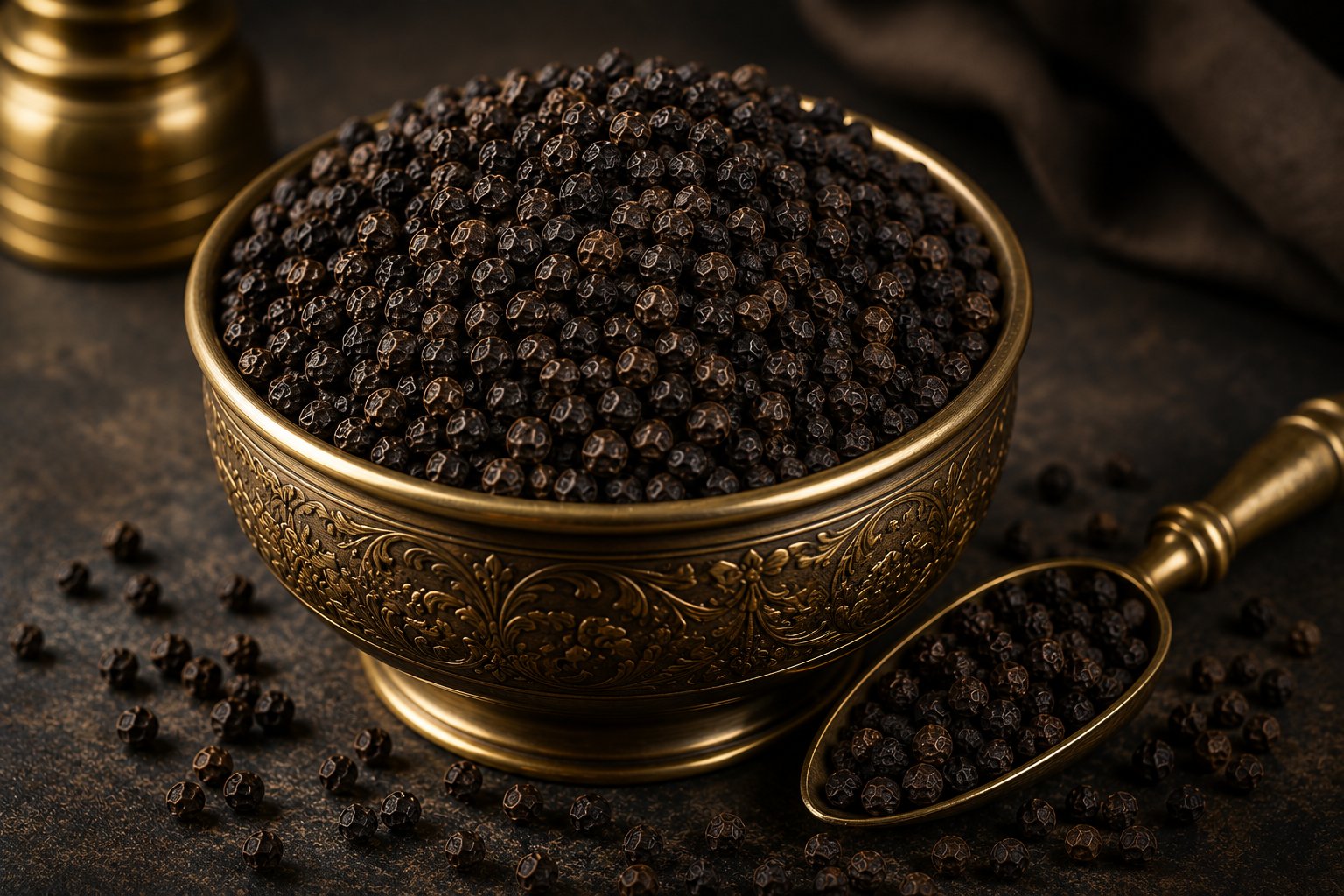
Black peppercorns close up
Grading System

Black Pepper Export Grades

Indian black pepper is graded by berry size, density (g/litre), cleanliness, and admixture levels. The following are the internationally recognised grades used in the Malabar and Tellicherry trade:

GradeFull NameBerry Size / DensityBest For
MG1Malabar Garbled Grade 1~4.5mm avg · ~450–500 g/lStandard premium export, food processing, spice blends
MG2Malabar Garbled Grade 2Slightly smaller · ~420 g/lIndustrial use, ground pepper, food manufacturing
TGEBTellicherry Garbled Extra Bold4.25mm+ · high densityPremium retail, aromatic blends, gourmet food service
TGSEBTellicherry Garbled Special Extra Bold4.75mm+ · very high densityLuxury/gourmet market, specialty retail, high-end brands
FAQFair Average QualityMixed sizes · ~390 g/lBulk industrial use, large-scale food processing
GroundGround Black PepperFine / coarse mesh availableDirect retail, ready-to-use food products

* Grades above follow the Export Inspection Agency of India (EIA) and Spices Board of India classification standards. Berry density (g/litre) is the key quality indicator alongside cleanliness and admixture levels. Source: EIA Black Pepper Certification Standards.

Health & Wellness

Why Black Pepper is Good for You

Black pepper contains piperine, its principal bioactive compound, which has been widely studied. The following reflects areas of scientific interest and traditional use — not medical claims.

Nutrient Absorption

Piperine is well-researched for its ability to enhance bioavailability of other nutrients — including curcumin, certain vitamins, and minerals — when consumed together. Widely used in supplement formulations.

🧬

Antioxidant Properties

Black pepper contains various plant compounds with antioxidant activity. Antioxidants help protect cells from oxidative stress, which is associated with ageing and chronic conditions.

🔥

Traditional Anti-inflammatory Use

In Ayurvedic medicine, black pepper has long been used for its warming, anti-inflammatory properties. Piperine is an area of ongoing scientific research for inflammatory conditions.

🧠

Neurological Research

Piperine's effects on neurotransmitter pathways — including dopamine and serotonin — are an active area of scientific study. Note: no medical claims are made here.

🍽️

Digestive Support

Black pepper has been traditionally used across cultures to stimulate digestion. In Ayurveda, it is considered a key digestive spice that supports digestive fire (Agni).

🩸

Blood Sugar Research

Some preliminary studies have explored piperine's potential role in metabolic health. This is an ongoing research area — further clinical study is needed before conclusions can be drawn.

Traditional Use

Black Pepper in Ayurvedic Tradition

The following reflects black pepper's historical role in Ayurvedic and traditional medicine. This information is educational only and does not constitute medical advice.

01

Ayurvedic Trikatu Formula

Black pepper is one of three core ingredients in Trikatu — the classical Ayurvedic formulation alongside long pepper (Pippali) and ginger. Traditionally used for thousands of years to support digestive metabolism and respiratory function.

02

Piperine in Supplement Science

Piperine extracts are commercially used in dietary supplements to enhance absorption of co-administered nutrients. This is one of the most well-documented applications of black pepper bioactives in modern food science.

03

Respiratory Support (Traditional)

In Ayurvedic tradition, black pepper combined with honey is a classic remedy for coughs, colds, and respiratory discomfort — used as an expectorant and warming agent.

04

Skin Research (Vitiligo)

Some research has explored piperine's interaction with melanocytes, relevant to vitiligo research. This remains a specialist area of study — buyers seeking to make product claims should consult current peer-reviewed literature.

05

Cardiovascular Research

Animal and in-vitro studies have explored piperine's potential effects on lipid profiles. These findings require further human clinical trials before being used as the basis for health claims.

06

Drug Interaction Note

Piperine may affect the metabolism of certain pharmaceutical drugs by influencing liver enzymes. Buyers formulating health products should review relevant drug interaction literature.

Culinary World

How Black Pepper is Used Globally

🥩
Meat & Grilling

Essential in marinades, rubs, and seasoning for steaks, roasts, sausages, and smoked meats across European and American cuisines.

🍜
Asian Cuisine

Core in Vietnamese pho, Thai stir-fries, Korean BBQ, Chinese black pepper beef, and Indian curries and garam masala blends.

🧂
Condiments & Sauces

Worcestershire sauce, steak sauce, hot sauces, salad dressings, and pickles rely on black pepper for depth and heat.

💊
Supplements

Piperine extract is used in dietary supplement formulations — particularly combined with curcumin — to enhance nutrient bioavailability.

Nutritional Information

Typical Nutrition (per 100g, approximate)

⚠️ Values below are approximate reference figures for whole dried black pepper, sourced from USDA FoodData Central. Actual values vary by origin, variety, and processing. These are for general reference only and should not be used in product labelling without independent laboratory verification.
NutrientApprox. Amount per 100gReference % DV*
Energy~251 kcal~13%
Carbohydrates (total)~64 g~23%
Dietary Fibre~25 g~89%
Protein~10 g~20%
Total Fat~3.3 g~4%
Calcium~443 mg~34%
Iron~9.7 mg~54%
Magnesium~171 mg~41%
Potassium~1329 mg~28%
Vitamin K~163 μg~136%
Piperine (active compound)~5–9% of dry weight— (no DV established)

* Reference Daily Values based on a 2,000 kcal diet (FDA/EU standard). Piperine content varies significantly by variety and growing region. Values should be independently verified for product labelling purposes.

Export Specifications

Product Details for Buyers

Available Grades

  • MG1 — Malabar Garbled Grade 1
  • TGEB — Tellicherry Extra Bold (4.25mm+)
  • TGSEB — Tellicherry Special Extra Bold (4.75mm+)
  • FAQ — Fair Average Quality (on request)

Specifications

  • Moisture: max 12–14%
  • Admixture: max 0.5%
  • Foreign matter: nil
  • Steam sterilised (food safety)
  • COA with piperine & volatile oil content

Packaging — Moisture Free

  • 25 kg / 50 kg vacuum-sealed PP bags
  • Vacuum-sealed foil pouches
  • Private label / branded packs
  • Custom packaging on request

Ready to Source Black Pepper?

Reach our export team via WhatsApp for the fastest response — we respond to all serious enquiries within 24 hours.

📱 WhatsApp — +44-7424-034320 📞 Call Us View All Products